
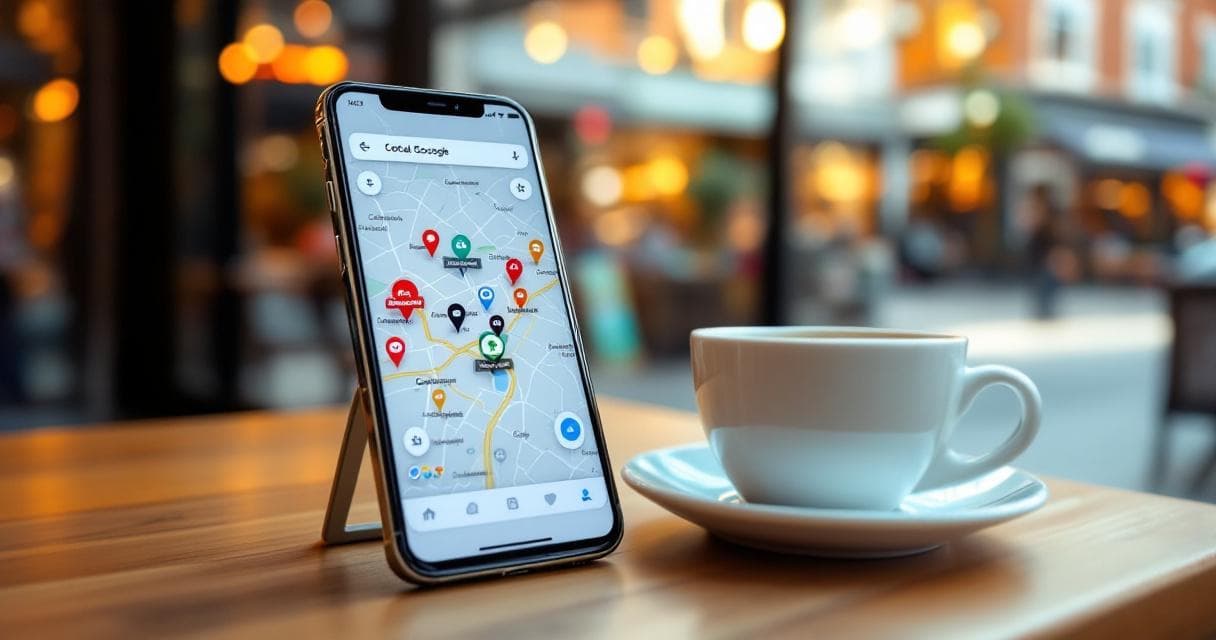
If you run a local business in the UK — a café, a trades company, a solicitor's practice, a boutique — the search landscape in 2026 looks different to what it did even two years ago. Google's local results are more competitive, AI Overviews are eating into click-through rates, and customers are using voice search, maps, and AI assistants before they ever type a query into a search bar.
The good news? Most of your local competitors haven't caught up. That's your window.
This guide covers exactly what's working for local SEO in the UK right now, what's changed, and what you need to do if you want your business to show up where it matters.
What's Actually Changed in Local Search Since 2024
A few shifts are worth calling out before we get tactical.
AI Overviews are now a fixture. Google's AI-generated summaries appear at the top of a growing number of local searches. If you want to appear in them, you need well-structured, factual content that directly answers questions. We've covered how to approach this in our guide on how to appear in Google AI Overviews.
Zero-click results have grown. More people are getting their answers directly from the search results page — especially on mobile. Your Google Business Profile is now doing more heavy lifting than your website for many local queries.
Search generative experience is reshaping intent. People ask full questions, not just keywords. "Best plumber in Leeds who does emergency call-outs" rather than "plumber Leeds." Your content and listing need to match this conversational intent.
Local pack competition has intensified. The three-pack — those map results that dominate page one — is harder to break into than ever. But it's still very winnable with a structured approach.
Start With Your Google Business Profile (And Actually Optimise It)
Your Google Business Profile (GBP) is the single most important asset for local SEO in the UK. It's free, it's powerful, and most businesses have one that's half-finished or never updated.
Here's what a properly optimised GBP looks like in 2026:
- Complete every field. Business name, address, phone number, category, hours, website, description. If a field exists, fill it in.
- Choose your primary category carefully. This has an outsized impact on which searches you appear for. "Plumber" and "Emergency Plumber" are different categories with different search volumes.
- Add secondary categories. If you're a florist who also does event styling, both categories should be listed.
- Upload photos regularly. Businesses with fresh photos consistently outperform those with none. Aim for at least two to four new photos per month — interiors, team, work in progress, finished jobs.
- Use the Q&A section proactively. Add your own questions and answer them. This signals relevance and controls what people see.
- Post weekly updates. GBP posts don't have dramatic ranking effects, but they signal an active business and give you extra space to include local keywords naturally.
- Collect and respond to reviews. More on this below.
Reviews Are a Ranking Signal — Treat Them That Way
Google's local ranking algorithm factors in review quantity, recency, and quality. A business with 12 reviews from 2022 will consistently lose out to one with 60 reviews from the past six months.
Set up a simple system to collect reviews:
- Send a follow-up message to every customer within 48 hours of completing a job or sale
- Include a direct link to your GBP review page (find this in your GBP dashboard)
- Make it easy — people won't hunt for where to leave a review
Respond to every review, positive or negative. Your responses are indexed by Google and read by prospective customers. A thoughtful reply to a negative review often does more for trust than ten positive ones.
Don't incentivise reviews or use review-gating practices. Google's guidelines are clear on this, and the risk isn't worth it.
Get Your NAP Consistency Right Across the Web
NAP stands for Name, Address, and Phone number. Google cross-references your business details across dozens of directories, citation sources, and data aggregators. If your address is listed differently on Yell, Yelp, Thomson Local, and your own website, it creates conflicting signals that suppress your local rankings.
Run an audit. Check your business details on:
- Yell.com
- Bing Places
- Apple Maps
- Thomson Local
- TrustATrader (for trades)
- FreeIndex
- Checkatrade
- Any industry-specific directories
Correct any discrepancies. Your NAP should be identical — including whether you write "Street" or "St", and whether you include a county.
Your Website Still Matters — Here's What to Prioritise
Some businesses assume GBP replaces the need for a strong website. It doesn't. Your site supports your local rankings and converts the traffic that finds you.
For local SEO specifically, focus on:
Location pages. If you serve multiple areas, create a dedicated page for each one. Not thin duplicate pages with the town name swapped in, but genuine pages that speak to that location — local landmarks, typical customers, specific services offered there.
On-page local signals. Include your town and region naturally in your page titles, H1s, and body content. A plumber in Sheffield should have "Sheffield" in their homepage title tag and mentioned organically in the copy.
Schema markup. LocalBusiness schema tells Google exactly who you are, where you are, and what you do. It's not difficult to implement, and it's still underused by most small businesses. Our schema markup guide for 2026 walks you through it.
Page speed and mobile performance. Most local searches happen on phones. If your site loads slowly or is difficult to use on a small screen, you'll lose the click even if you win the ranking.
If you're running a Shopify store and struggling with rankings, the issues are often structural — we've broken these down in detail in why your Shopify store isn't ranking.
Local Content: Write for Your Town, Not Just Your Trade
One underused tactic for local SEO in 2026 is genuinely local content. Most businesses publish generic service pages. Very few publish content that's specific to their area.
Ideas that work:
- "The best time of year to get a boiler service in Manchester" (seasonal + local)
- "What to expect from a conveyancing solicitor in Bristol" (local buyer intent)
- "Our guide to planning permission for extensions in Surrey" (hyper-local regulatory content)
This type of content builds topical authority in your area, earns local links, and signals to Google that you're genuinely embedded in your community — not just a national brand with a local landing page.
To find the right topics, you need to understand what your local customers are actually searching for. Our guide on how to do keyword research for a UK small business will help you do this properly. And once you know your targets, how to write blog posts that rank on Google shows you how to structure them effectively.
Know Where You Stand Before You Optimise Anything
Local SEO without measurement is just guessing. Before you invest time in any of the above, understand your current baseline.
- Where do you rank for your core local keywords?
- What's your current search visibility score?
- Are you appearing in the local pack for your target searches?
- Which pages on your site get local organic traffic?
A quick search visibility audit takes under 30 minutes and gives you a clear picture of what's working and what isn't. If you're unsure what search visibility actually means or why it matters, start with our explainer: what is search visibility and why does it matter for your UK business?
When choosing tools to help you track and improve your local presence, the best SEO tools for small businesses in the UK (2026) covers the full landscape, including which ones are worth the money for smaller budgets.
FAQ: Local SEO UK 2026
How long does local SEO take to show results in the UK? Most businesses see meaningful movement within three to six months with consistent effort. Quick wins — like fully optimising your GBP and correcting NAP inconsistencies — can show results within weeks. Long-term ranking stability takes longer to build.
Do I need a website to rank locally, or is Google Business Profile enough? A fully optimised GBP can generate leads on its own, but a website significantly strengthens your local rankings and gives you more control over how you appear in search. The two work best together.
How many Google reviews do I need to rank in the local pack? There's no magic number. What matters is having more recent, high-quality reviews than your closest local competitors. Consistent acquisition matters more than hitting any particular total.
Is local SEO different for AI search and voice search? The fundamentals overlap. Structured data, clear factual content, and a well-maintained GBP all support visibility in AI-generated results and voice responses. The main difference is tone — voice queries are conversational, so content that answers questions directly performs better.
Should I pay for local SEO services or do it myself? Many small business owners can handle the basics themselves with the right guidance and tools. Where agencies earn their fee is in technical audits, link building, and managing multi-location complexity. If budget is tight, start with the fundamentals yourself and bring in help once you know where you're stuck.
Start Tracking Your Local SEO Performance Today
Local SEO in 2026 rewards consistency over complexity. Get your GBP in order, fix your citations, publish content that's actually relevant to your area, and track your progress properly.
ClimbrIQ gives UK small businesses a clear view of their search visibility — tracking keyword rankings, monitoring local performance, and surfacing exactly where to focus your efforts. No agency required.
Try ClimbrIQ free and see where you stand in under five minutes. Or explore our features to see what's included, and check our pricing — plans start from the kind of budget that makes sense for an independent business.